Daily Italian Recipe · Pasta
Gricia with Truffle Salami
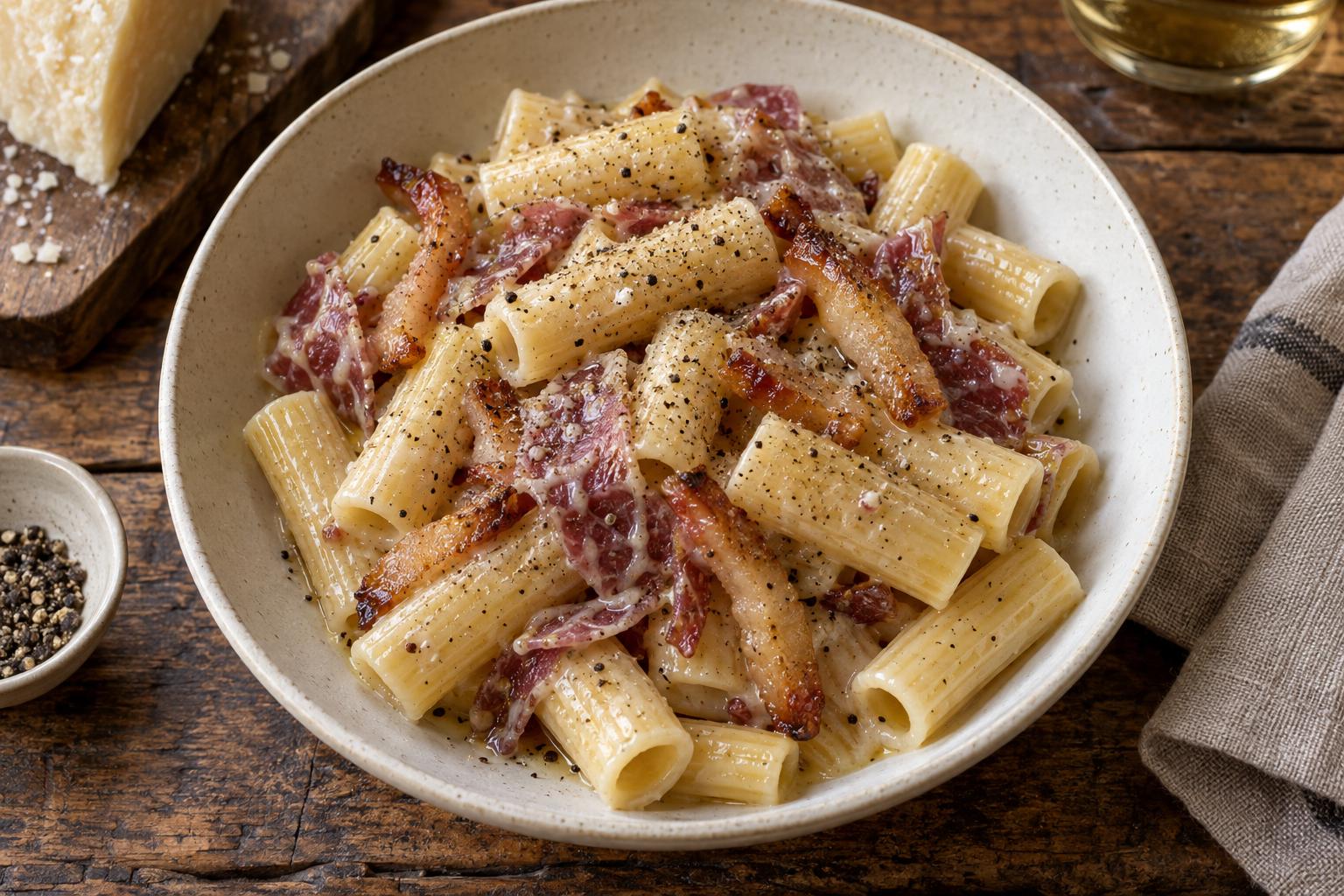
Classic Lazio gricia meets an Umbrian-inspired truffle accent: guanciale, Pecorino Romano and black pepper coat rigatoni, with truffle salami folded in gently at the finish. This is a clearly signposted variation—not the traditional gricia formula.
Total time
30 minutes
Serves
2 people
Difficulty
Intermediate
Origin
Umbria/Lazio
Gricia belongs to the pastoral cooking traditions of Lazio, particularly the area around Amatrice, although its precise origins are debated. Its defining ingredients are guanciale, pecorino and black pepper, brought together with pasta water rather than cream.
Umbria’s celebrated truffle traditions inspire this variation. Truffle salami adds an earthy finishing note without replacing the guanciale that gives gricia its characteristic flavour and rendered-fat sauce.
Ingredients
- 180 g Dried rigatoni
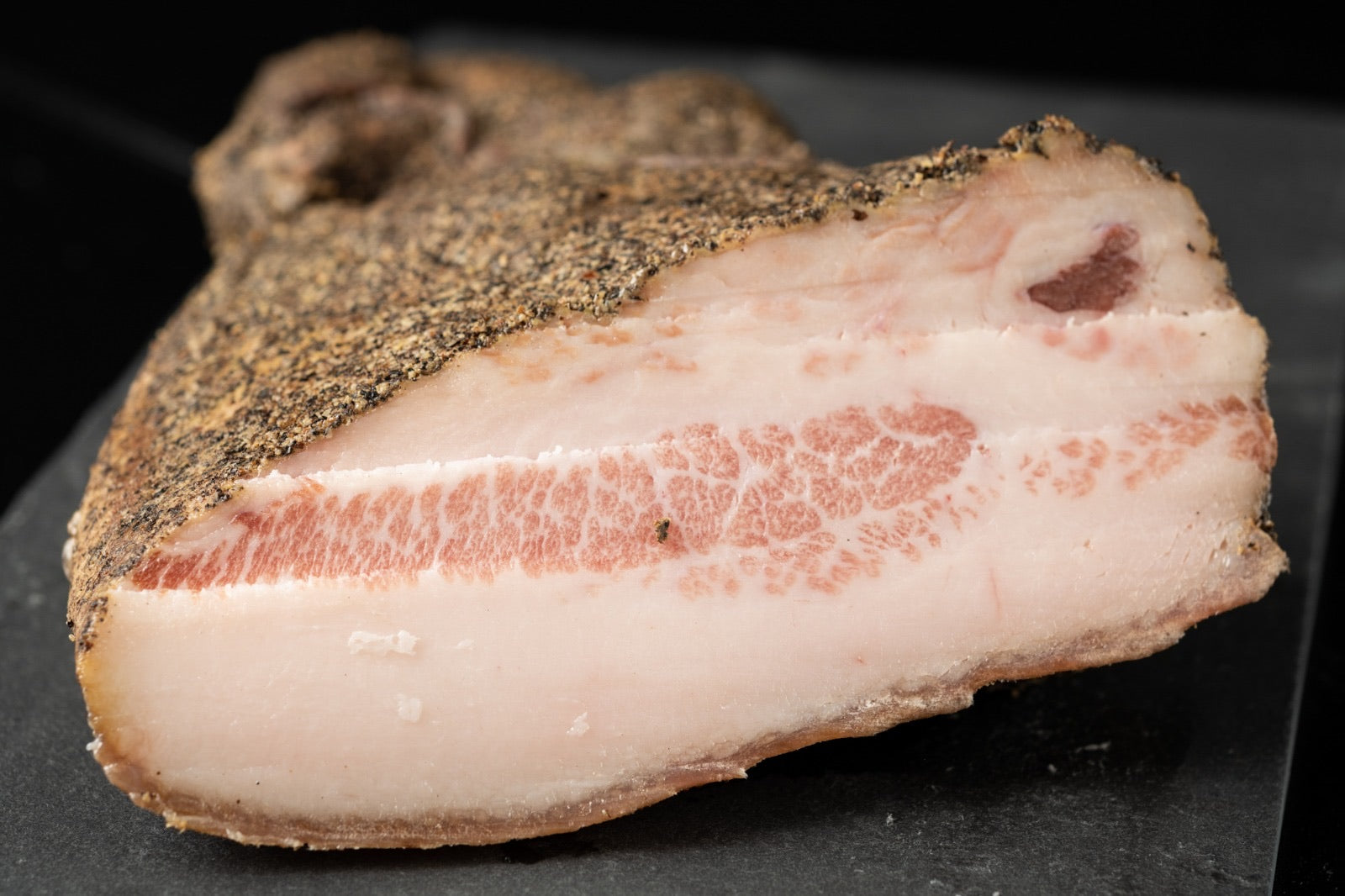
- 60 g Guanciale, rind removed, cut into 5 mm stripsShop
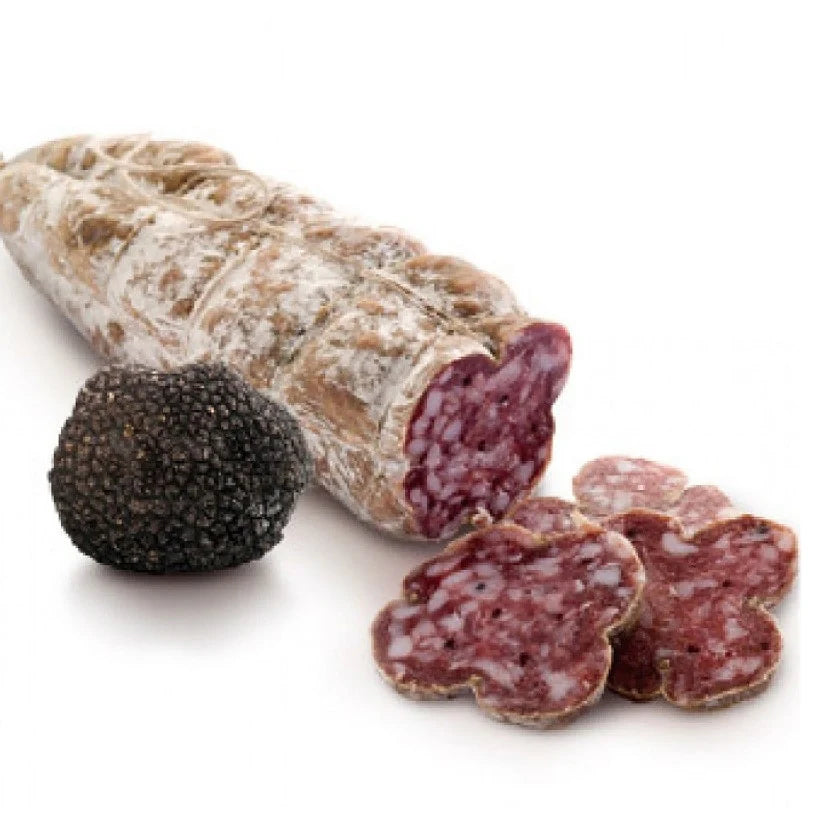
- 40 g Truffle salami, any inedible casing removed, cut into short ribbonsShop
- 45 g Pecorino Romano, very finely grated
- 1 g Freshly ground black pepper
- 1.5 litres Water for cooking the pasta; reserve 250 ml before draining
- 6 g Fine sea salt for the pasta water
Method
- 1
1. Prepare the ingredients
Bring the 1.5 litres of water to the boil. Cut the guanciale and salami as specified, keeping them separate, and finely grate the Pecorino Romano. Have a wide frying pan and a small mixing bowl ready.
- 2
2. Render the guanciale gently
Place the guanciale in the cold frying pan without oil. Cook over medium-low heat for 6–8 minutes, stirring occasionally, until its fat has rendered and the edges are golden. Turn off the heat, add the salami and stir for 15–20 seconds in the residual warmth. Lift both meats onto a plate, leaving the rendered fat in the pan.
- 3
3. Cook the rigatoni
Add the 6 g salt to the boiling water, then add the rigatoni. Stir regularly and cook until 2 minutes short of the packet’s al dente time. Before draining, reserve 250 ml of the starchy cooking water.
- 4
4. Make the pecorino paste
Measure 30 ml of the reserved pasta water into a small cup and let it cool until warm rather than steaming hot. Gradually stir it into the grated pecorino to make a thick paste. Keep this away from direct heat.
- 5
5. Finish the pasta in the pan
Return the pan of guanciale fat to medium-low heat. Add the black pepper and stir for 10 seconds, then carefully add 60 ml pasta water. Add the drained rigatoni and toss for 1–2 minutes until al dente, adding more reserved water in 15 ml increments if the pan becomes dry.
- 6
6. Emulsify off the heat
Remove the pan from the heat and wait about 60 seconds, until active bubbling stops. Add the pecorino paste in two additions, tossing vigorously. Loosen with reserved pasta water, 15 ml at a time, until the sauce is glossy and clings to the rigatoni. Do not return it to a simmer.
- 7
7. Fold in the meats and serve
Fold in the guanciale and gently warmed truffle salami. Toss once more, taste before adding any extra salt, and divide immediately between two warm bowls. The sauce should flow lightly around the pasta, not sit in a stiff mound.
Chef's secret
Treat the truffle salami as a finishing ingredient, not as guanciale: a brief warming softens its fat without making it leathery or dulling its aroma. The sauce itself comes from rendered guanciale fat, starchy water and pecorino added off the heat.
Did you know?
Gricia is often described as the tomato-free relative of amatriciana. Unlike carbonara, it contains no egg; its creamy appearance comes from emulsification, not cream.
Common mistakes
- Frying the truffle salami until crisp: prolonged heat toughens it and diminishes its delicate aroma.
- Adding pecorino to a bubbling pan: excessive heat makes the cheese clump instead of forming a smooth sauce.
- Salting the pasta water heavily: guanciale, salami and Pecorino Romano already contribute substantial salt.
Storage & reheating
Best eaten immediately. Refrigerate leftovers in a sealed container within 2 hours and use within 2 days. Reheat gently in a frying pan with 15–30 ml water per portion, stirring until piping hot throughout; the cheese sauce may lose some smoothness. Avoid freezing for best texture.
Shop the recipe
Delivered across Hong Kong by SF Express or Lalamove.
FAQ
Is truffle salami traditional in gricia?
No. Traditional gricia uses guanciale, pecorino and black pepper. This recipe keeps that foundation and adds truffle salami as an explicitly Umbrian-inspired variation.
Can I replace the guanciale entirely with truffle salami?
Not for the same result. Guanciale supplies the rendered fat and characteristic flavour of gricia; salami behaves differently when heated. Keep the guanciale and use the salami as the finishing accent.
Can I order the featured ingredients in Hong Kong?
The Italian Club Hong Kong offers the featured guanciale and truffle salami for delivery across Hong Kong via SF Express and Lalamove. Source the dried rigatoni and Pecorino Romano separately.